I had posted this previously in April of 2012, shortly after I had started my blog, but I thought that it was apropos to post it again, now that the release of Josiah Stubb is only weeks away.
My debut novel, "The Adventures of Charlie Smithers", had yet to be published, and the only people who had ever heard of my work knew me as an author of short stories, but not as a novelist. I'm not complaining; by that time my work had been recognized in Canada from coast to coast, and even in far off England, although it had yet to reach south of the border into the United States. A lot has changed since then.
The following is a commentary on how Josiah Stubb came into fruition. It wasn't always an easy journey, and I'm damn sure it's one that I could never have made alone. If you're reading this, Amber, thank you a million times over, for being there every step of the way.
And now, without further ado:
The Story Behind Josiah Stubb
The Adventures of Charlie Smithers is a novel that took place in 19th
century Africa, so was promptly labeled as historical fiction by many
publishing houses (a genre that, for some reason, they do not accept).
There's little enough historical content, so I hesitate to agree, for
all the good it does me, but after flogging every publisher that was
calling for submissions, and being continually turned down, I resolved
that I was through with historical fiction, and that my next novel would be contemporary as all get out, and as literary
as anyone could ask for. So naturally, I launched into Josiah Stubb, a
story that took place in the 18th century, based on the second siege of
Louisbourg. I don't know what gets into my head sometimes, but that's
the way it goes with writing - at least that's the way it goes with me.
The story presents itself, and I write it - I mean, there's really not
that much choice. So there I was, up to my eyeballs in historical
fiction again, only this time even deeper than ever.
Still, I have interest in that period. As a whole, I think that
Canadians know very little about that time: only that the British
success was the prelude to The Plains of Abraham the following year. But
given that building the fortress was one of the most ambitious
undertakings by the French in North America, and that it was deemed by
many to be impregnable, the obvious question arises: How did the British
take it?
It was a compelling question, and before I knew it, I was pouring over every book
that I could find on the subject, as well as spending untold hours on
Google. Let's be clear though, as a rule I hate doing research, as I
imagine that most fiction writers do. That's the surest way of taking an
interesting subject and boring me silly, until something that was meant
to be enjoyable actually becomes work. But there is a case to be made
for taking yourself seriously. I mean if you consider yourself as a
serious writer, and you're going to tell a tale based on fact, then you
have a responsibility to do everything in your power to get those facts
right. Keeping that in the back of my mind was a great motivator
throughout the process.
I began Josiah Stubb on the 15th of August, 2010, and finished the rough
draft shortly after the New Year in 2011. That may seem like a long
time for a rough draft, but bear in mind that there were frequent
interruptions as the emerging story revealed ever more questions
demanding answers, and then it was back to the research table again
until I was ready to proceed. That could be hard sometimes. I'm not
patient when it comes to writing. I want to get at it as soon as the
idea comes to mind. I'm hooked on the journey, the place where it takes
me, and anything that gets in the way is regarded as a distraction. In
the case of Josiah Stubb, there were distractions aplenty. That's
probably why I felt so unsure with what I had when I was finished. The
continuity had been broken so many times that I wasn't sure if there was
any flow. As a rule, I make a serious effort to edit my work before
letting Heartless Editor get her hands on it (which might explain why I
get so hysterical when she gives it a thumbs down - I mean, when you
think that you're down to nudging commas around, and inserting the odd
semi-colon for effect, and she points out some rather serious errors,
that will require what seems like an immense amount of work to fix,
denial is a pretty enticing alternative), but this time I gave her the
(very) rough draft, more or less saying, "Here! You figure it out,
because I can't." She read it and offered a few suggestions (like maybe
watering down the love scenes a little [I tend to get carried away]) but
on the whole declared that she liked it.
That was a relief. In fact, it was huge. It got the adrenaline pumping
again to the point where I could see, that with just a few changes, the
road would become clearer. After that the process continued far more
smoothly.
There comes a time in the process where you see what you have, but you
can also see what it could become. As improved as it was, I still had to
admit that the manuscript wasn't readable. Something was missing, like
it was too two dimensional or something. It lacked depth, texture, and
all those undefinable elements that make a story come to life. It felt
like there was a disconnection. I mean, there I was, stuck out on the
prairies, writing about something that happened way out on the east
coast almost three hundred years ago. All I knew about the places I was
writing was from books, and I felt that that's the way that they read.
So, with that in mind, I could see that there was no way around it - if I
insisted on considering myself as a serious writer, a road trip was
definitely in order.
Cape Breton - the parts I saw of it - is beautiful in the summer. I
would like to see more some day, but we (Heartless Editor and myself)
were there on a working vacation, so it was straight to business.
Driving into the modern town of Louisbourg was a thrill. When we pulled
into the small, but very nice hotel overlooking the harbour, it felt
like coming home. There, maybe a mile to the left, was Lighthouse Point
(in the flesh, so to speak), and over there, an equal distance to the
right, was the fortress itself - which meant that that island I could
see right in front of me at the harbour's mouth must be where the Island
Battery had been situated...which meant that we couldn't be very far
from the Royal Battery's site. All the research I'd done to that point
was paying dividends. During our time there we visited the fortress
twice, walked over every square inch of it - from Rochefert Point to the
King's Bastion, and studied the ruins of the unreconstructed Queen's
and Princess' Bastions, where it's still possible to see the scars in
the earthworks from untold barrels of gunpowder the British used when
they destroyed it as a precaution, in case Louisbourg was ever returned
to France after the end of hostilities, as had been done previously. We
drove out to Freshwater Cove (as it was called at the time. Its modern
name is Kennington Cove, after the frigate that provided covering fire
during the landing) and again the research came into play, as there were
no signs to show where the main British had landed, but we found it
with very little trouble, and even found the clefts in the rock, large
enough for one, maybe two boats, that General Amherst spoke of. We
walked out to Black Point, drove out to Lighthouse Point, and walked out
to Wolfe's Landing (not to be confused with the real landing at
Freshwater Cove) where the siege guns were brought in from the fleet,
then dragged with inestimable toil, over rocks and through bogs to the
various batteries that eventually encircled the harbour. As far as
research went, it was priceless, and when we returned to the hotel, I
would while away the hours doing re-writes, or transferring a wealth of
notes taken during the day into the story's outline, happily sure that,
now, I was getting it right.
That was Cape Breton. In a way, St. John's was even better.
Louisbourg is a sleepy little town that virtually shuts down in the
evening. St. John's is neither sleepy, nor little (to someone who thinks
that Brandon's too big) and comes alive after dark. It's vibrant, yet
friendly, with cars stopping for us if we even looked like we wanted to
cross the street (we must have had TOURIST stamped on our foreheads).
The taxi drivers' were helpful, and their accents charming, and I won't
even start about the food. After all, we were there to work.
We were all over Signal Hill (Flagstaff, as it was known in period),
even out on North Head, where a bittersweet scene was to play out in the
book. Between Cape Breton and St. John's, I wouldn't want to calculate
all the miles we walked, but let's just say that when we went out for
dinner in the evening, we felt that it was well-deserved.
This was all really good stuff we were getting, but the reason - the
main reason - we had come to St. John's was that I wanted to get a feel
for what the town had been like in that period. Since that time there
had been at least four major fires that had destroyed virtually
everything, and each time the rebuilders hadn't felt obliged to follow
the lines of that which had just been erased. So it was almost
impossible to describe the town with any sort of accuracy. I didn't know
any street names, or even if there were any streets, or if they were
cobbled. Who was the gentry, or what passed for gentry? I knew the
manner of government, but where did it reside? In fact, I knew very
little, and hoped to find answers at Memorial University. What we got
was a huge pile of books that the librarian thought might be helpful.
They might have been for all I know, but we were due to fly out the next
day, and I couldn't see us pouring over all those books in that time.
Then we struck gold. The previous day, a lady from Archives gave us the
name of an archeologist (who shall remain unnamed, but his initials are
Gerald Penney) who ran a consulting firm for the city.
At first I was dubious. I wasn't sure if an archeologist was what I
wanted. An archeologist could tell me where a road was, but not what it
was called, and that seemed true for everything else I wanted to know,
but I shouldn't have worried. I Googled his firm, got an email address,
and sent a message stating what it was that I wanted. I received a reply
a few hours later with an invitation to drop by his offices the next
morning (the morning that found us in the library), and he would see
what he could do. So we summarily abandoned the books, and took a cab
out to see him. As it turned out, we didn't get to speak to him for very
long, because he turned us over to the historian he had on staff (who
also shall remain unnamed, but his initials are Bob Cuff). A historian was exactly what I wanted, and I don't think I could have done any better than Bob.
Once more we explained what we wanted, he didn't blink an eye, but
excused himself, returning within the minute with a map, dated just a
year or two before the time when the story took place. Then he started
to talk. I was scribbling like mad: wonderfully antique names like
YellowBelly, Maggoty Cove, King's Wharf, Parson's Garden, Ring Noone,
and on and on and on, until when we reached the end an hour later, I was
fighting the worst case of writer's cramp I'd had in years, and pages
and pages of my notebook had been filled. I continued to correspond with
Bob long after returning home, and continued to glean valuable
information from his wealth of knowledge. How do you adequately thank
someone for that? Not just for his knowledge, but his patience as well.
But that was our working vacation, and from thereon in the process was
more the norm, until by December, I was at last able to declare it at
least readable, and began to send it out for consideration, knowing
that, historical fiction or not, no stone had been left unturned to make
it the best that it could be.
And that is the story behind the making of Josiah Stubb.
Friday, 24 January 2014

Josiah Stubb - Target Date the End of February
I just heard from Sam at Wild Wolf this morning. The targeted date for the release of my next novel, "Josiah Stubb", is the end of February, with the paperback available a month later.
Stay tuned for more information as it comes in (Ha! Like you could ever get away!)
Stay tuned for more information as it comes in (Ha! Like you could ever get away!)
Sunday, 19 January 2014
A Good Friend of Mine: Jacob Rayne
I've always been envious of Jacob. Not least because he has what I consider to be the perfect name for an author, and what a coincidence - he IS an author, and a damned good one, too! Don't believe me? Check out his Amazon page, and see for yourself. http://www.amazon.co.uk/Jacob-Rayne/e/B00HS4E3G8/ref=sr_tc_2_0?qid=1390143060&sr=1-2-ent
Oh, and while you're at it, check this out to see what he has to say about me (great judge of character, that man has!) http://jacobrayne.wordpress.com/cool-stuff/chuck-w-lovatt/
Oh, and while you're at it, check this out to see what he has to say about me (great judge of character, that man has!) http://jacobrayne.wordpress.com/cool-stuff/chuck-w-lovatt/
Monday, 13 January 2014
Josiah Stubb - Coming Soon
I just received this email from Sam at Wild Wolf:
"Hi, Chuck
Sorry it's taken me so long to get back to you about Josiah, but I think we're about ready to get the ball rolling with it.
Can you send me the final version of the manuscript when you're ready, along with suggestions for the blurb and cover? Also, start thinking about any changes to your biography, photo and any dedications etc.
Kind regards,
Sam"
Stay tuned...
Tuesday, 7 January 2014
Voices - The Icon
My copy of the Fall Issue of Voices arrived in the mail today, included inside is my short story, The Icon, one of the oldest in my collection - written in 1993, back when my experiences working in Romania were still very fresh.
In case you're wondering why I'm receiving the Fall issue in January, it's due to a clerical error - my name went missing from the mailing list, and it slipped my mind until the editor put out a call for submissions for the Spring issue. It means that I missed the launch, and the chance to do another reading, too. Oh well, c'est le geurre.
So, nine short stories published in 2013, and I think that's all the more remarkable because I stopped submitting back in April, so that I could concentrate on writing my next novel. Sorry, I couldn't resist a little boast.
If you care to read The Icon, I've attached it below. It's not very long, only 2000 words. You could have it finished before your first cup of coffee.
THE ICON
CW
Lovatt - May 30, 1993
She
peers at herself in the dressing table mirror, little crinkles in the corners
of her eyes as the sides of her mouth pull into a critical frown. A gown of snow
white satin accents the slimness of her waist before sweeping to the floor in a
virginal cascade. Shoulders bare, a string of pearls loop around her neck,
highlighting its graceful reach, before descending to her breasts.
On the dressing
table (a Louis Quatorze) are amassed
phials and decanters of perfumes, lotions and powders. Had she been asked, she
supposed that she would have approved of the gentility they infused, but it
would have been with an aristocrat's surprised air; for certainly, such things
were to be taken for granted.
She
observed her reflection: the brow, high and powdered, knit in perusal; the vivid
blue eyes painted with brushings of mascara, accenting their allure; the
cheekbones (high, proud and rouged) together with the nose (long, powdered, and
arrogant) created a satisfactorily haughty expression, she decided, before her
inspection descended to her mouth.
It was
a broad mouth, the lips full, but the aforementioned corners still drawn, not
quite ready to pronounce approval. They were painted a bold ruby-red, the
bottom one pouting in the most refined, practiced way so that when a man looked
at her his eyes would not see that pout, but his heart . . . ah, but his heart
would feel!
One
eye narrowed into a contemplative slit; she decided that the lips would need
more paint after all.
It was a risky
business of course, putting on one's face. Too little and you entered the ball
as a wet hen, dowdy and unforgivably dull; too much and you would be the talk
of Society, the Count's scarlet woman.
One corner of
that patrician mouth finally pursed upward, turning into a lazy grin as she
reached for the golden cylinder of lip-gloss.
On second
thought, let Society talk. Was she
not the Countess; and what did a countess care for such things?
The answer, of course, was proud and simple . . . nothing.
Yet, even as she
dipped the tiny brush into the phial, a frightened voice inside her head bid
her to hurry. A brief moment later, it warned her that it was already too late.
A foreboding
crept over her as black spots began to materialize in the mirror, dissolving
her reflection, one grain at a time.
"No!"
she moaned, reluctant to leave, but she continued to wither, the black dots to
expand, and the grains in the mirror to spread ever deeper with each passing
moment.
"No, please. No!"
Still the dots
continued to grow until her vision was filled with their black nothingness, as
they united to form one solid field. Then, once assured of victory, the
darkness began fading into grey.
As a
final betrayal she opened her eyes, breaching her last defense, allowing in the
morning and a heavy yoke of reality to settle around her heart.
The
dream slipped from her mind like sand through her fingers, and as she
unconsciously drew the last vestiges of warmth from its waning aura, she
simultaneously prepared herself for the numbing shock when she flung the single
blanket aside.
She
sat up, breath fogging the air. A threadbare shawl lay on the floor beside the
pallet. Shivering, she picked it up and hugged it around her shoulders, trying
to ward away the chill, even as it sank ever deeper inside her. With a rueful
sigh, she remembered that there was no wood for the fire.
Still
the cold cleared her mind, and as she willed herself to keep from shivering,
the guttural, arrhythmic sound of snoring caused her to turn her head to the
unkempt form sprawled beside her, completing the transformation from her dream.
He
had been drinking last night, but then he drank almost every night. She wished
he wouldn't, yet lacked the will to protest.
History
had taught her that it would not be wise to.
He worked hard,
he insisted, and who was she to begrudge his relaxation? He usually said this
while standing over her, weaving unsteadily, as his eyes narrowed to dangerous
slits.
If ever she
replied, it was guarded with apprehension, because when his eyes narrowed like
that, his fists were seldom far behind.
She raised an icy
hand to her face, gently touching her cheek. Her wince was resigned as her
fingers came into contact with the bruise.
He hadn't been so bad last night. God would
agree with her that there were times when the beatings had been far, far worse.
There were times when she had crawled, battered and bleeding, into a corner of
their single room, praying for the drink to carry him off into sleep. There were
times when she had woken on the cold, hard floor, with just the dimmest memories
of how he had battered her unconscious. There had been broken bones and sprains;
there had been eyes blackened and teeth hammered from her head - cuts and
bruises beyond counting; but she knew the fault was hers, that somehow she had
done something wrong. In the night, after she had fed Luca, and sang him to
sleep, she would get down on her knees and pray before the icon of the Heavenly
Child, and beg Him to guide her, to help her to be a better wife and mother.
Surely God was good. Surely one day He would hear her
prayer.
No, last night had not been so bad. True,
he had been drinking, and true, he had hit her when she was slow to heat his
soup, but had used only the flat of his hand.
She supposed that it was no more than
what was right. A man must drink; how else was he to prove that he was a man?
Once more she resolved to anticipate her husband, as only a good wife should.
Later he had
almost been kind. Perhaps he had been rough; perhaps he had even hurt her more;
but while she lay on their pallet with him on top, panting fumes into her face,
he had used her the way she supposed that God had intended a wife to be used.
No, last night had not been so bad.
Perhaps, and her
eyes now fluttered hopefully to the icon on the wall, perhaps God would be kind
enough to give her another child. Countless times in the past she had conceived,
and countless times miscarried, mostly, if the truth were to be told, from the
beatings. Yet her husband was a man, and a man must work his will; and through
him, the will of the god who denied her those children; but still she prayed,
so far, to no avail.
For her there had been Luca, and only Luca.
While she sat,
shivering on the edge of her pallet, she looked and could see in the morning's
gloom his sleep-tousled head, just visible above his blanket. The sharp, deep
ache of love filled her heart, and she willed it across the room to her son.
Ah,
with Luca, God had indeed been kind! He was a good boy and loved his mother; but
he was three months past his tenth year now, and the times that he wished to
spend cuddled in the womb of her arms were less and less these days.
She sighed this
thought away, and got up from the pallet. Soon her men would be awake, demanding
their breakfast.
From long habit
she went through an inventory in her mind as she managed a painful shuffle to
the lone cupboard in the corner of the room; the insides of her thighs were bruised
and chafed reminders of the night. She winced the soreness away, and stood
before the cupboard, weathered arms crossed over shriveled breasts.
There
was goat's cheese, and some pig fat as well. The soup was all gone, but there
was still a wrinkled tomato at the back of the shelf. The end of a stale loaf
of bread, scarcely more than a crust, would round it off. She frowned and nodded
- a gesture more inward than visible - it would have to do.
Later
she would go to the market, and if God was good, she would be able to gather
wood along the way so that she would have enough for her fire, and enough to
sell to pay for the food. If she was not so lucky she would beg on the street…and
if she still lacked the money…
She
chased the thought away with an impatient twitch of her head.
Of course it
would be all right. She had managed so far, had she not? Was God not good? Was
He not kind?
Her
husband might lack perfection, but what of it? So what if he drank? So what if
he beat her? So what if she knelt in front of the icon many nights, waiting for
him to return, praying that a vagabond would fall upon him and kill him along
the way? Afterwards, had she not always groveled before the Christ Child,
filled with horror, and begged forgiveness for such evil thoughts? If anyone
was wicked it was her.
Wearily, she
tried to ward away this thought also, but without effect; instead, like a
cancer, the old memory returned.
Yes, it was she
who was wicked, not her husband.
A cracked mirror
hung on the wall beside the cupboard. She gazed into its marred surface, and
was not deluded that her reflection was due solely to the imperfections in the
glass. The last cherished memories of her dream slowly twisted into a cruel
taunt.
She was not yet
thirty, but already old and withered beyond those years.
Yet she had not
always looked this way. Once she had been beautiful, once, many years ago; during
the time when she had been weak…
Hard days had
come, with no wood to gather, and nothing to be begged for on the street.
Had it been for one
day, or had it been more? Her memory refused to recall; but there had been a
man, a rich man with dark curls, who flashed a smile filled with strong white
teeth and had golden rings on his fingers, and a beautiful, warm coat of sheepskin.
He had been willing to pay, enough for food and firewood for an entire week.
Eleven
years ago, it had been.
She studied her
son while he slept, but instead of his angelic face, she now only saw that of
the wealthy stranger – the face of sin.
She had been so hungry.
Graceless, she fell to the floor,
her hands clasped under her chin while, yet again, her eyes sought the icon on
the wall.
"Forgive me!” she implored,
whispering, “Forgive me! I was hungry! Doesn't it matter that I was
hungry?" Unnoticed, a single tear crept down the weathered crevices of her
cheek, eventually coming to nestle in the trembling corner of her mouth.
But on this point, also, God remained silent.
The End
A Much Belated Happy New Year
I hope you'll forgive me for posting this so late. I'm blaming my iPhone because it wouldn't let me send photos to my computer. Glaring at it didn't seem to help either (thus exhausting my knowledge of techno-wizardry), but it's all sorted out now.
It's been another incredible year: received my first ever royalty, The Adventures of Charlie Smithers has made appearances as a best seller on Amazon in various categories in Canada, the UK, and the US, and nine (count'em NINE) short stories published, including two in Wild Wolf's Twisted Tails, AND TWO THAT WON AWARDS!!!
Not too shabby at all.
I wanted to send you this photo as a sort of 'from my house to yours'...except that it isn't my house at all, but Amber's (hers was cleaner). We're all having a great time, seated around the table at our traditional New Years Eve fondu. Starting at the bottom left is Amber; her son-in-law, John; her oldest daughter, Sue; her youngest, Deb; and her son Jeff. This was even more special in that Deb and her daughter, Kate, made the trip up from Casper Wyoming (we really missed you, Dan), and Sue and John came all the way over from Stockholm, Sweden. These guys are the best folks you'd ever want to meet - lots of laughter and great conversation. I feel privileged that they've taken me under their wing.
If you were wondering, I was the one holding the camera for a change.
My Links For January
First of all, do NOT forget this one, it's VERY important: 524230_10201017551306723_255111181_n.jpg
FB Author's Page: https://www.facebook.com/tacscwl
Twitter: @tacscwl on Twitter

FB Author's Page: https://www.facebook.com/tacscwl
Twitter: @tacscwl on Twitter
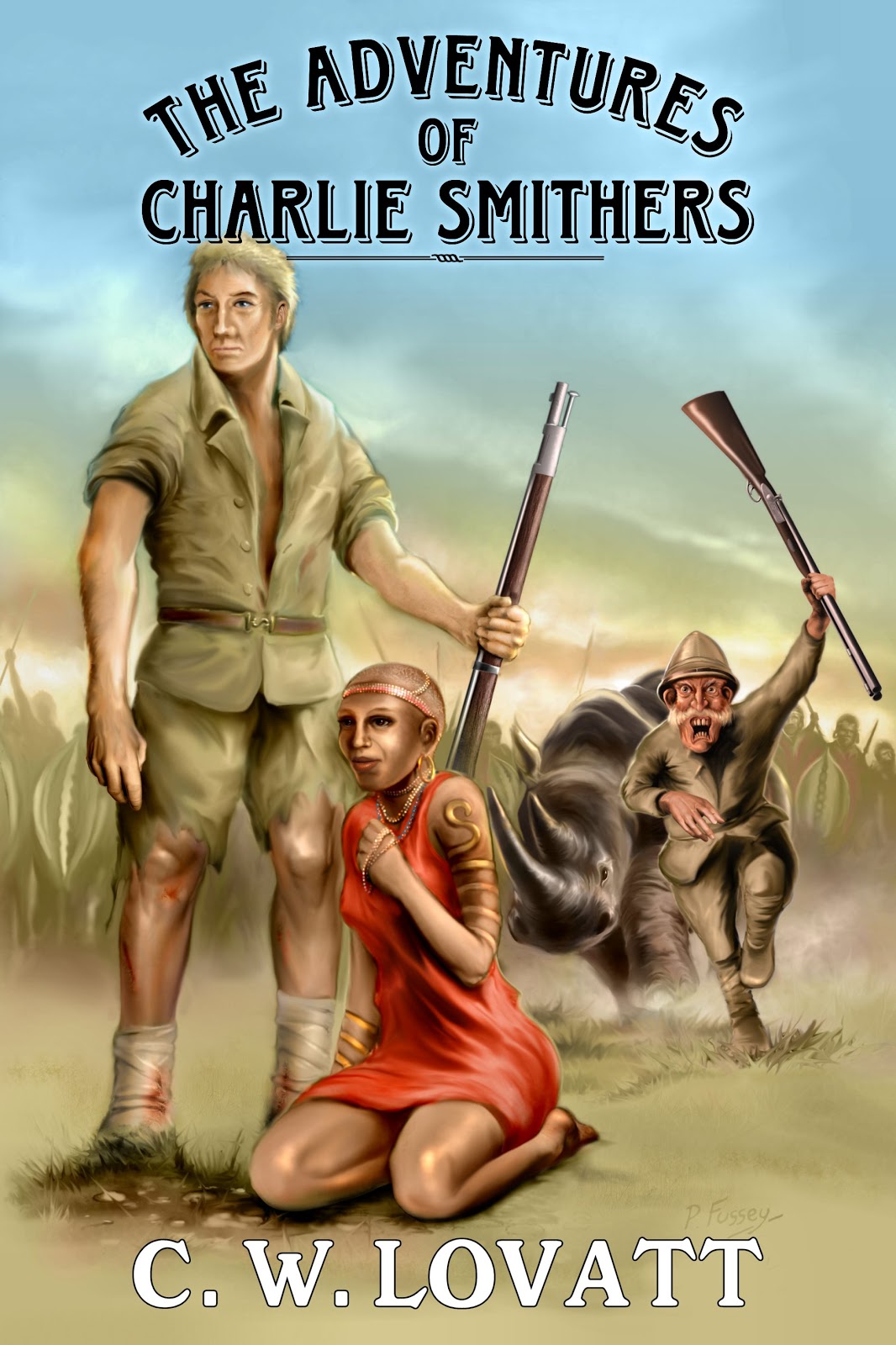
GoodReads: The Adventures of Charlie Smithers
Barnes and Noble: The Adventures of Charlie Smithers: http://www.barnesandnoble.com/c/c.-w.-lovatt
And for Amazon:
Germany: The Adventures of Charlie Smithers Spain: The Adventures of Charlie Smithers France:The Adventures of Charlie Smithers Italy: The Adventures of Charlie Smithers Brazil: The Adventures of Charlie Smithers Japan: The Adventures of Charlie Smithers and finally, welcome to Amazon, Australia


Subscribe to:
Posts (Atom)